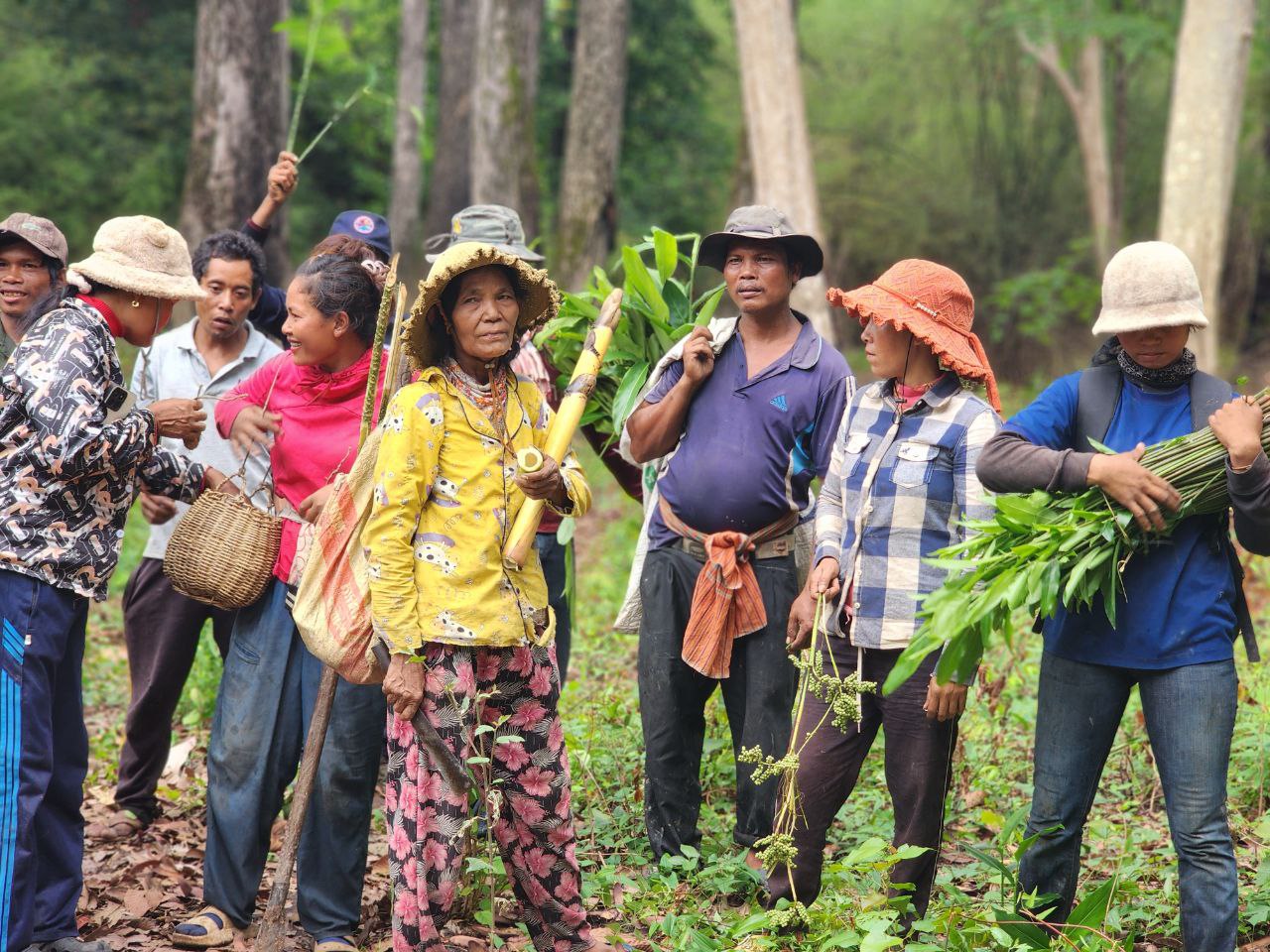
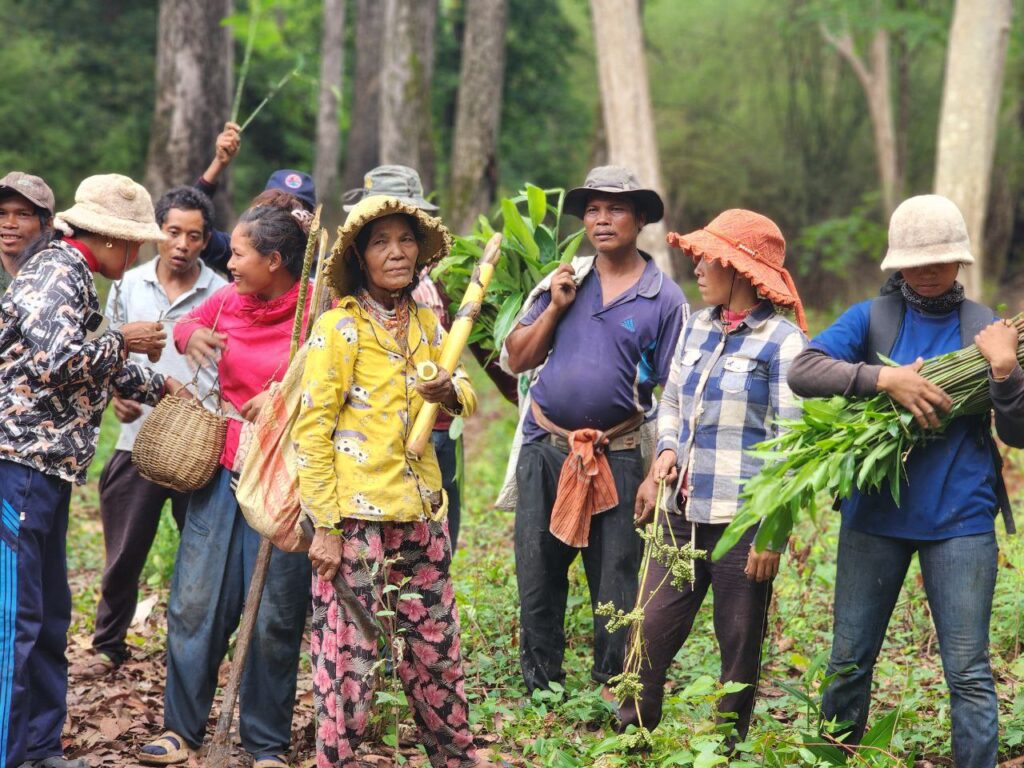
Phnum Rai is the homeland of the Poar Indigenous people, an ethnic minority group remaining along the Khmer-Thai border, about 98 km southwest of Battambang city. During the 1980s, they fled to refugee camp along the Cambodia-Thailand border. Unfortunately, many members’ lives were lost during the genocidal reign of the Khmer Rouge, which controlled the country for only three years, eight months, and twenty days.
After the 1991 Paris Peace Agreement and the first national election in 1993, the surviving Poar Indigenous people returned to their homeland and resettled in Phnom Rai village (noting that they were displaced again 1997-1999). Led by Ta Khvay1 Sa Leang, who visited the land in January 1991 to assess the location for returning members, the community began rebuilding. He was the 4th-generation traditional leader (1968-1991). They resumed traditional cultural practices and Buddhist rituals under the guidance of their elders.
Although this area was considered one of the most dangerous plots due to landmines and unexploded objectives, since 2000 their land and resources have faced encroachment from new settlers, wealthy outsiders from other provinces, and even Thai logging companies. This has caused loss of land and destruction of forest they rely on. Since 2003, in response to these threats, community leaders have mobilized to demand joint management of approximately 1,800 hectares of their land.
The struggles for land rights have been extremely difficult-active leaders have faced accusations, court summons, and various forms of threats. Despite the many obstacles, their fights for land and forests continued because these threats had become commonplace and unavoidable.
The North-Eastern Cottage Organization (NECO) received funding from the “IP Small Grant UNDP 2024 and 2025” to strengthen capacity-building of community. This enabled the community to successfully advocate to the relevant authorities and ministries for the registration of their Indigenous Community Land Title (ICLT). All of this success resulted from the strong, active participation of community members throughout the ICLT process.
After many rounds of dialogue and land demarcation carried out by provincial working group- led by NECO, the Battambang Provincial Department of Environment, the Phnom Samkos Wildlife Sanctuary, and Wildlife Alliance (WA), based on community guidance-900 hectares or 50% of the area they requested, were approved and allocated for continued community use under the ICLT process.
1 Poar local language called its traditional leader
NECO also worked closely with UNDP’s national coordination team to ensure that all project activities contributed to NDC (Nationally Determined Contributions) and FOLU (Forests and Other Land Use) priorities. The interventions included tree nursery development, tree planting, agroforestry, traditional communal farming, rice varieties trial, and the ICLT process—all contributing to sustainable positive change.
For long-term land-use planning, these collective efforts minimized conflicts and maximized responsible, community-led land governance. The land-use measurements-indicated by the community-clearly established boundaries between members and non-members, neighboring villages, protected areas, residential land, rotational farms, and permanent agricultural plots. These were officially mapped and documented.
Even though the demarcated land area was less than expected (leaders anticipated recognition of all community land, while members hoped for their individually used plots), the community expressed strong appreciation for the results. It is important to note: “This stage of obtaining the ICLT is only the beginning of fulfilling our demands. What matters now is our continued collective effort to protect against rapid loss of natural resources and withstand climate change,” said Mr. Lev Naek, the community leader. He added, “Going forward, the community must rely on its strength and unity to protect our land and environmental heritage.”
The presence of the ICLT project in Phnom Rai has become a model for natural resource governance within protected areas, through clear land-use demarcation and recognition of community rights. This experience is now serving the REDD+ project in the Cardamom Mountain range (Battambang, Pursat, and Koh Kong), involving 23 communities. The Ministry of Interior, which leads inter-ministerial work on Indigenous affairs and ICLT, has learned valuable lessons to strengthen ICLT sustainability-such as community livelihoods, traditional communal farming, returned conflict lands, agroforestry, clean energy use, and Indigenous traditional knowledge. These lessons are now being shared with other IP communities in Cambodia.
The Ministry of Rural Development has selected the Phnom Rai ICLT site as the model Indigenous village for 2026. ICLT efforts have expanded from one community in Battambang to three communities in Preah Vihear in 2025 under the IP Small Grant UNDP (Top-Up Grant). The Kouy Indigenous communities and provincial authorities are actively participating, hoping for successful outcomes by 2026. The project includes Communal Land Tilting for three Kouy Indigenous communities, establishing one community conservation area, expanding the Poar community’s traditional farm system, tree planting, and agroforestry activities.
At Phnom Rai, additional projects are supporting their effective initiatives, including the Indigenous Peoples Access to Energy program (SGP/OP7/Y5/CORE/IPAE) and Partner Asia’s NECO#25-810 project, strengthening the Poar people’s customary rights in forest management.
NECO has granted an MoU by the Ministry of Interior on ICLT, becoming the first organization in Cambodia to do so-covering Stung Treng, Preah Vihear, and Battambang provinces. The organization is seeking additional funding to help Indigenous communities secure land tenure and forest rights, participate actively, and strengthen local knowledge as a crucial element of climate resilience and environmental justice.
Views: 3
No Comments