Background
Cambodia’s legal framework recognizes Indigenous Peoples’ rights to collective land ownership and natural resource management through the Land Law (2001), Forestry Law
(2002), Community Protected Area (CPA) Sub-Decree (2007), and Indigenous Communal Land Titling (ICLT) Sub-Decree (2009). However, despite these legal provisions, Indigenous communities continue to face significant legal, administrative, and procedural barriers in securing collective land rights and managing their natural resources. The ICLT process remains complex, lengthy, and insufficiently enforced, limiting Indigenous communities’ ability to protect their ancestral lands and livelihoods.
Challenges
For generations, Indigenous Peoples have depended on forests, rotational farming systems, and communal lands for their cultural identity, food security, and economic well-being. Increasing pressure on natural resources, land encroachment, and competing land-use interests have intensified threats to these traditional systems. Communities have also faced challenges in developing the institutional capacity required to manage communal resources, establish community regulations, and engage effectively with government authorities throughout the land registration process. Simultaneously, forest degradation and limited livelihood opportunities have weakened both biodiversity conservation and community resilience.
In Preah Vihear Province, three Kuoy Indigenous communities-Prame, Boh Thom and Srae Preang villages in Prame Commune, Tbeng Meanchey District-have experienced persistent challenges in reclaiming and securing access to their ancestral lands and forests. Since 2012, portions of their customary territories have overlapped with Economic Land Concessions (ELCs) granted to Roy Feng Sugar Company, which established one of Southeast Asia’s largest sugar-processing facilities in 2019. As a result, communities’ lost access to rotational and permanent agricultural lands, experienced encroachment into the Chhaeb– Preah Rokha Wildlife Sanctuary, and faced restrictions on traditional livelihood activities such as resin tapping and non-timber forest product (NTFP) collection.
Project Intervention
With support from the UNDP Indigenous Peoples Small Grants Programme, the project aimed to strengthen the participation and leadership of Indigenous Peoples-particularly
women, youth, and persons with disabilities-in advancing Forest and Other Land Use (FOLU)targets under Cambodia’s Nationally Determined Contributions (NDCs). The initiative sought to expand Indigenous Peoples-led land and forest tenure security efforts that contribute to climate resilience, sustainable land management, and biodiversity conservation.The project focused on enhancing leadership, empowerment, and collaboration skills among
Indigenous women and youth while promoting gender-responsive approaches to natural resource governance. Through targeted capacity-building activities, community members were equipped with the knowledge and skills necessary to participate effectively in decision- making processes, advocate for their rights, and implement sustainable land-use practices that support both community well-being and environmental integrity.
Implemented by NECO, the project worked closely with community committees, elders,women, men, and youth to strengthen traditional governance systems, promote cultural solidarity, and enhance understanding of community roles and responsibilities. The initiative supported both Indigenous Communal Land Titling (ICLT) and Community Protected Area (CPA) establishment processes while reinforcing local stewardship of land, forests, and wildlife resources.
Participatory Land Rights and Governance Processes
Through a series of community meetings, consultations, and participatory mapping exercises, community members documented customary land use patterns, land ownership
histories, and traditional territorial boundaries. This process included identifying areas overlapping with protected areas and former Economic Land Concessions. The participatory approach ensured that Indigenous knowledge, historical evidence, and community perspectives were fully incorporated into the land registration process.
Collaboration with local authorities, government institutions, civil society organizations, and
other stakeholders helped build consensus around community claims and strengthened support for Indigenous land rights. These efforts laid a critical foundation for advancing collective land registration and resulted in the submission of Indigenous Communal Land Titling application documents for the three communities.
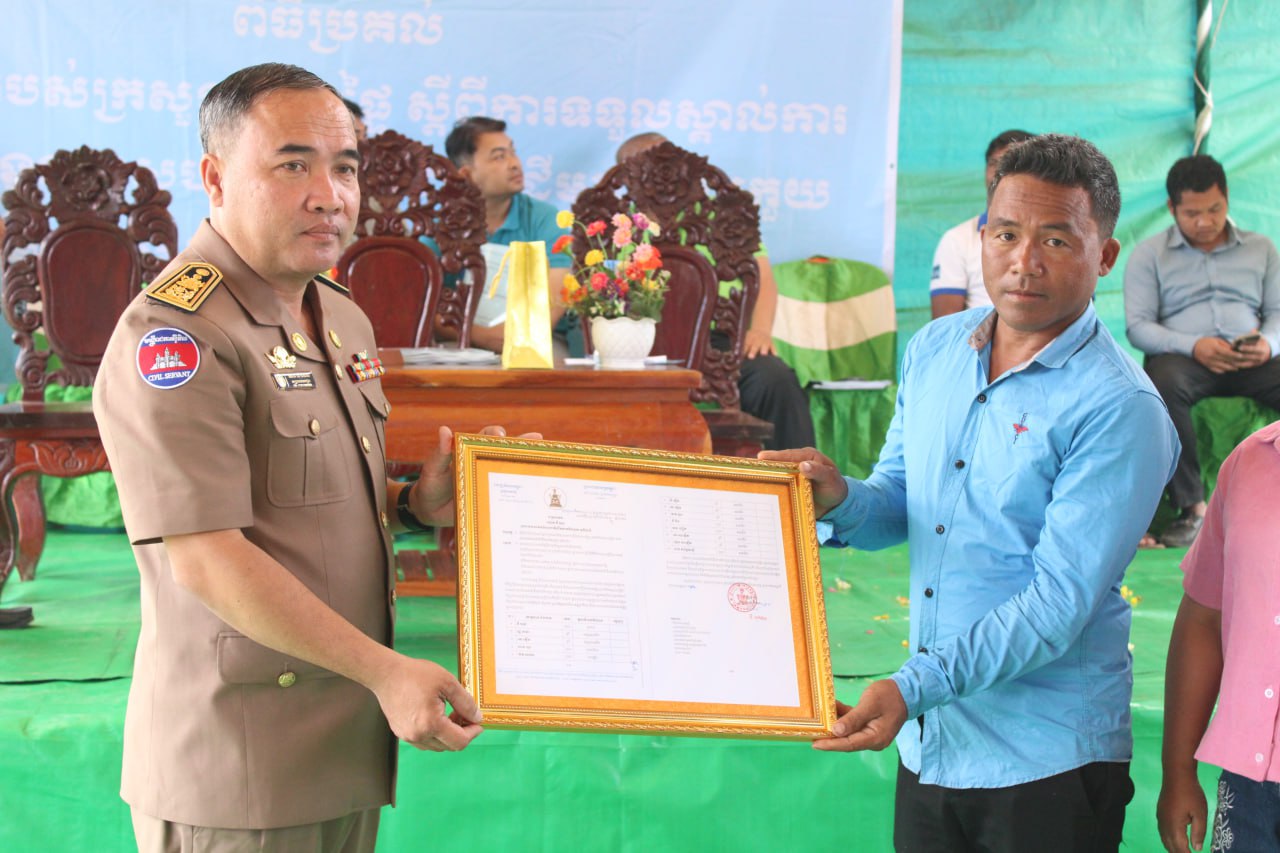
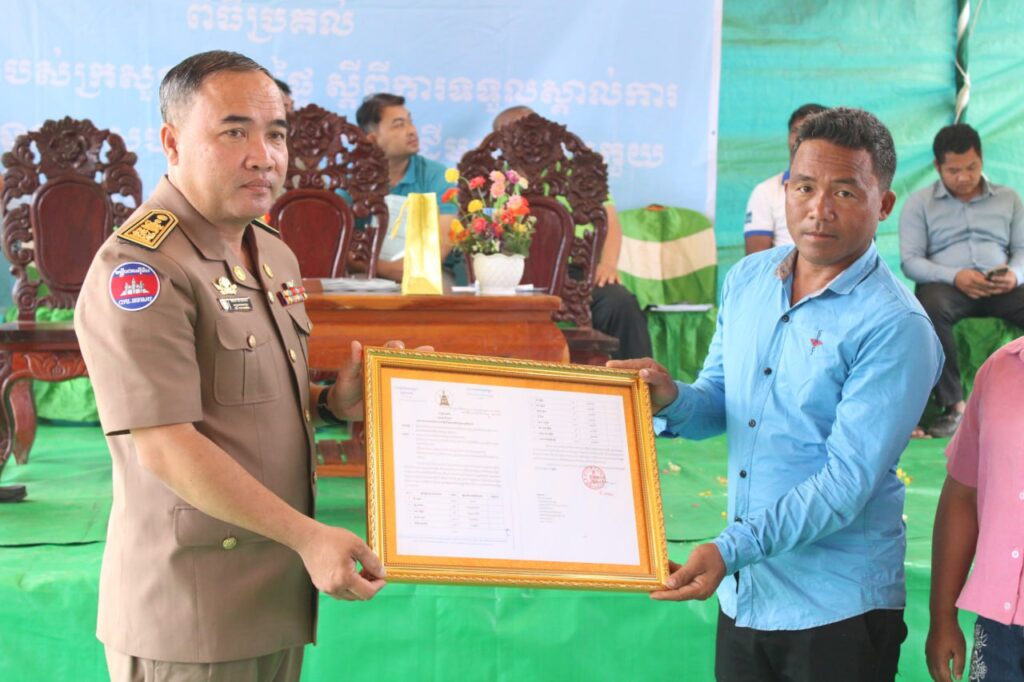
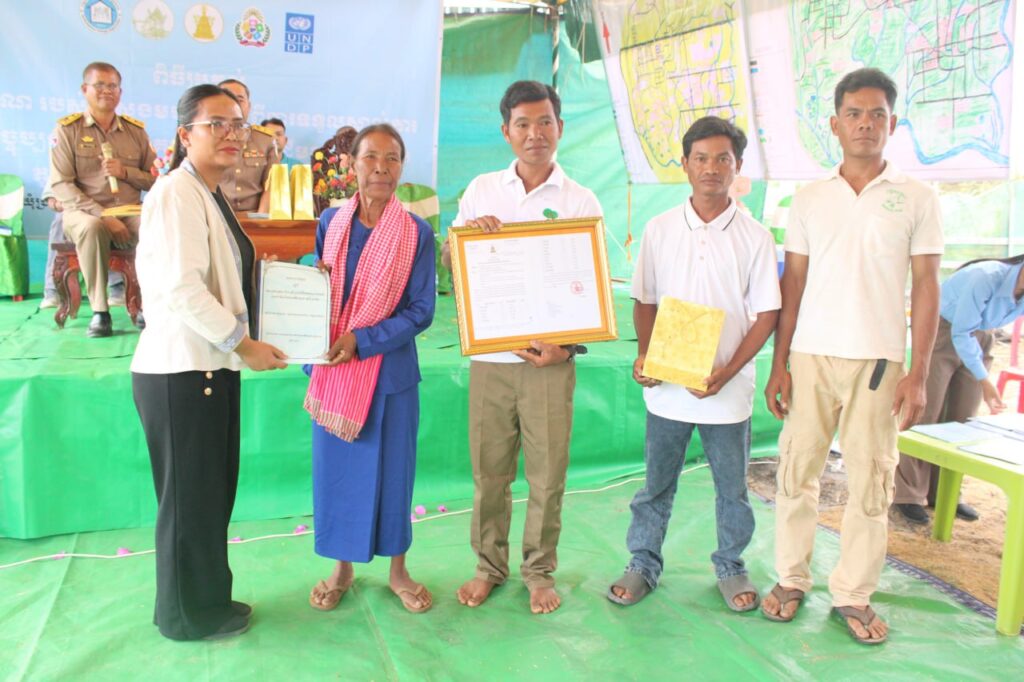
To further strengthen stakeholder ownership, a large-scale dissemination and consultation event was organized, bringing together community representatives, government authorities,development partners, and civil society organizations. The event provided an opportunity to review community priorities, validate the need for both ICLT and CPA processes, and increase awareness of Indigenous Peoples’ rights. Importantly, the event facilitated the official handover of Ministry of Interior recognition documents to the three Indigenous Communal Land Titling committees, marking a significant milestone in the communities’ journey toward legal recognition.
Continuous engagement with stakeholders throughout the project enabled communities to progress through critical stages of the ICLT process. Capacity-building activities further empowered community leaders, women, men, and youth to actively participate in land governance, advocate for their rights, and contribute to the sustainable management of communal resources.
Community Conservation and Protected Area Management
The project also supported the establishment of a Community Protected Area (CPA) within the Chhaeb-Preah Rokha Wildlife Sanctuary. Through inclusive consultations and Free, Priorand Informed Consent (FPIC) processes, Indigenous communities, local authorities, and relevant stakeholders developed a shared vision for conserving more than 7,880 hectares of forest.Participatory boundary demarcation exercises integrated traditional ecological knowledge with formal conservation planning approaches. This process resulted in communityagreement on protected area boundaries and the establishment of a unified CPA management structure across the three villages. The initiative strengthened local ownership of conservation efforts while creating opportunities for Indigenous communities to play a central role in protecting biodiversity and maintaining ecosystem services.
Results and Impact
The project has significantly strengthened the capacity of the three Kuoy Indigenous communities to advance their land rights and natural resource management objectives. Community members now possess greater knowledge of legal frameworks, land registration procedures, and community governance mechanisms. Women and youth have assumed more active leadership roles, contributing to more inclusive and representative decision- making processes.
As a result of the project, Indigenous households whose customary lands overlap with former Economic Land Concessions have gained increased confidence in accessing and cultivating their lands while pursuing legal recognition through the ICLT process. Despi te challenges arising from regional border tensions and broader economic pressures during the first half of 2026, communities continued agricultural production and livelihood activities, demonstrating strengthened resilience and social cohesion.
The ongoing ICLT process has not only enhanced prospects for long-term land tenure security but has also contributed to conflict prevention, improved community institutions,and more sustainable natural resource management. At the same time, CPA establishment has strengthened local conservation efforts and created a foundation for protecting critical forest ecosystems while supporting traditional livelihoods.
Lessons Learned
The experience demonstrates that securing Indigenous land rights requires more than legalrecognition alone. Success depends on inclusive governance, meaningful participation, strong community institutions, and sustained engagement among Indigenous communi ties, government authorities, and development partners.
The project highlights the importance of combining communal land tenure security with biodiversity conservation, community empowerment, and livelihood resilience. Participatory land-use planning, stakeholder collaboration, and recognition of traditional knowledge were critical factors in building consensus and advancing both land rights and conservation objectives.
Conclusion
The project demonstrates how integrated support for Indigenous governance, communal land tenure, biodiversity conservation, and sustainable livelihoods can strengthencommunity resilience while contributing to Cambodia’s climate, environmental, and sustainable development commitments. By empowering Indigenous communities to securetheir land rights and manage their natural resources, the initiative has laid the foundation for more equitable, sustainable, and climate-resilient development in Preah Vihear Province. As the ICLT and CPA processes continue, the three Kuoy communities are better positioned to protect their ancestral territories, preserve their cultural heritage, and sustainably manage the natural resources upon which future generations depend.
Views: 0
No Comments